

Imagine you’re the king of a nation, and you’re under attack from a barbaric force. You defeat them once, you defeat them twice, and so on, but each time you let them go. But the barbarians do not understand the language of compassion. This is not a TV show that a delinquent got reformed. The barbaric forces attack again, capture and torture the king, ravage the kingdom, loot the nation’s wealth, and commit unimaginable crimes against women and children.
Why?
All because of a misplaced sense of compassion.
This is not an entirely fictitious scenario. It so happened in the history of Bharat that King Prithviraj Chauhan kept pardoning Muhammad Ghori. The one time Ghori attained victory, He didn’t spare Chauhan.
I did some research before writing this piece and found that there is ambiguity on the number of times Ghori attacked the 12th-century king of Ajmer, Prithviraj Chauhan. Some claim it was multiple times, as far as twenty-one, some claim it was seventeen, and some say he won over Prithviraj Chauhan in the second conquest itself.
Whatever may be the truth, the reality remains that you cannot let morality come in the way of dispensing justice. Ghori’s victory over Chauhan began the Western rule over India, and arguably, the entire sub-continent is still suffering consequences and a sense of identity crisis even in the twenty-first century.
It is striking that now history, as taught and sponsored by the beneficiaries of the end of British rule in India, is being re-examined and questioned.
Was it only Gandhi’s non-violence that brought India her freedom?
Not really. Now, the prominent role of the Indian National Army of Subash Bose, RIN Mutiny, etc, is being highlighted, and rightly so.
There have been cases of criminals being pardoned or out on parole committing the same crimes again.
If you’re working for a corporation, you cannot keep pardoning or giving second chances to erring employees.
KRISHNA WAY
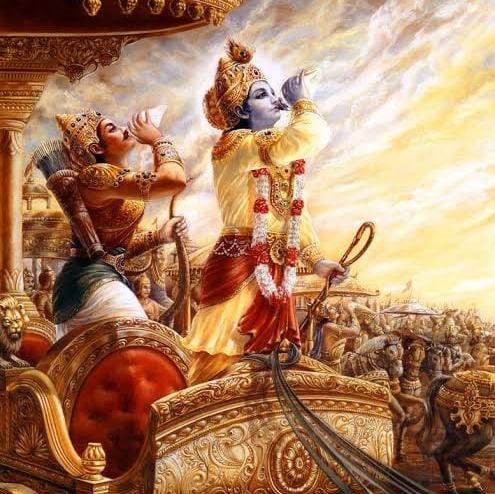
At the end of the great war of Mahabharat, as Duryodhana lies on the ground writhing in pain, Shri Krishna asks Bhima and the other Pandavas to spare him the jibes. In fact, Krishna laments the loss of a fabulous warrior. Similarly, Shri Krishna grants utmost respect to Karna upon his death.
The ones familiar with the story of Mahabharata will say that it was actually Shri Krishna who got both the warriors killed. Why the duality or contradiction?
Well, there is no contradiction at all.
Krishna mirrors existence. He embodies nature and divinity in its entirety. For Krishna, there are no friends or enemies. Whatever a person or situation needs, He does just that.
Moonlight doesn’t discriminate.
The Sun lights up everybody.
A flower gives fragrance for that is its very essence and nature.
Nature doesn’t believe in right or wrong and human morality. Depending on the choices we make in our lives, we get the consequences. Piety and Sin are religious concepts meant to establish order, not judgments from God or existence.
Before the great war of Mahabharata began, it was Krishna who took the responsibility for giving peace one more chance. When His suggestion and negotiations failed, war was inevitable. Krishna inspires and orchestrates the win for the Pandavas.
Why?
When rulers like Duryodhana and company could have such a fall from grace that they duped their own cousins of their wealth and tried to disrobe a royal lady in public, Krishna knew they wouldn’t make just rulers.
He did just what was necessary to establish peace, harmony, and order in the society at that time.
However, most importantly, it never made Him bitter or biased against anyone.
JESUS AND THE PROPHET

The Temple of Jerusalem was the principal place of worship for the Jewish faith during the time of Jesus Christ. However, the place, as mentioned in the New Testament, had become a place of corruption and desecration.
Shared understanding and imagery about Christ is that of a peaceful, radiant being. All of that is true, but less is spoken about how Jesus whipped (literally) corruption out of Jerusalem back in his time.
It is said that Jesus upset at the corruption in the sacred place of worship, made a whip out of chord and drove away the merchants from the temple.
Prophet Mohammad also had to engage in various battles and conquests. He had to do so both to protect the interests of his people and fight against threats of extermination from the then Meccan and Arabic tribes.
What we can learn from these historical figures is that life cannot function by static moral dictates, especially for people in positions of power. War often has to be waged to establish peace.
In interpersonal relationships, uplifting another and being gentle with mistakes— both ours and the other person’s is the way to peace. However, even in our personal space, if things turn toxic or abusive, to protect, one must take steps to establish boundaries.
Compassion is not just about forgiveness; often, punishment with the intent to correct is more compassionate than forgiving, especially in society.
I have noticed how people have become much more careful about following traffic rules in the past some time. At least this is true for central and south Delhi.
Why?
Because of strict law enforcement, fear of fines, and cameras being installed to catch traffic violations. The fines have been increased as well.
I, too, drive with more attention and care.
It is the same with all other rules enforced by the society and establishment. Even during the COVID era, fines and fear of the law forced people to wear masks— a mandate meant to protect the people themselves!
I do not mean to say there is no space or place for reformation in the society. The prequel of this piece is all about that. But often, with certain people second chances, reformations do not fit and work. And when such attempts fail, rather than imagining a utopian world, we’d do well to follow the ‘Krishna way’ of doing what is necessary to bring order to our world, even if it is at the cost of confrontation.
It is easy to make sermons on compassion, forgiveness, second chances, and so on when a wrong has been done to another. When the same act has been done unto us or a loved one, we will seek justice and often retaliation.
To conclude:
Life is not static. What works for one does not for another. What works in one situation does not necessarily apply to another.
Handle each situation as it comes using your wisdom. And see which is the best response that applies to a situation, be it Alfred Way, Lasso Way, or Krishna Way.
Thank you for reading until the end. I sincerely hope this piece was a worthy investment of your time and gave you some new ideas for living.
Here’s a question for you to mull over:
Have you ever faced a situation where you had to choose between compassion and justice? What did you choose?
Kushagra
 Wisdom from the Smiling Panda