

Once, in an interview, when asked about nepotism, Varun Dhawan, a Hindi movie actor, responded with something on the lines of, “Why do you all crib so much? It isn’t like your Daddy didn’t buy you a pencil box!”
One cannot and should not pay much heed to what Varun Dhawan says, especially since he has also lately coined phrases like “mental blowjob.”
But the guy can act. And act well.
Years back, when I used to watch Hindi cinema, I’d seen his work and vouch that the man can act. Badlapur was a showcase of the man’s acting prowess. It’s another thing when we expect a person who may have prowess in one field to speak brightly about every topic under the Sun. Not everyone is Shahrukh Khan, anyway.
And as we mention Shahrukh, one thinks of the debut movie of his daughter, Suhana Khan. Suhana, along with other kids of privilege, debuted in a Netflix movie called Archies, which happens to be the Indian adaptation of a popular Western comic series.
As is the norm with the internet of the day, anything that is put out is subject to jokes and memes. A collection of privileged kids releasing their group project wouldn’t be spared. Hosts of memes, jokes, and clips from the movie were shared all across social media. Human beings love to make fun at other people’s expense, more so when it is someone whose financial status is above and beyond what many of us may be experiencing currently.
I don’t watch Hindi movies. There are numerous reasons for this. I have no bias against the Hindi language— my mother tongue and a language I feel more at ease with than my second language, English. I watch highly selective content, which may or may not turn out okay, but I do my due diligence before investing my time in any content, and sadly, more often than not, Hindi cinema doesn’t live up to my investment of time.
I’d rather keep scrolling on the phone, send memes to friends, and ogle at the filter-enhanced pictures of ladies who appear pretty on social media than watch this movie or most others produced by the industry.
But all the jokes and memes made me reconsider Mr Dhawan’s statement that I mentioned at the beginning of the piece.
Let me play the devil’s advocate and present a case for Mr Dhawan and his ilk before I take you to 18th Century Paris.
NEPOTISM CONUNDRUM
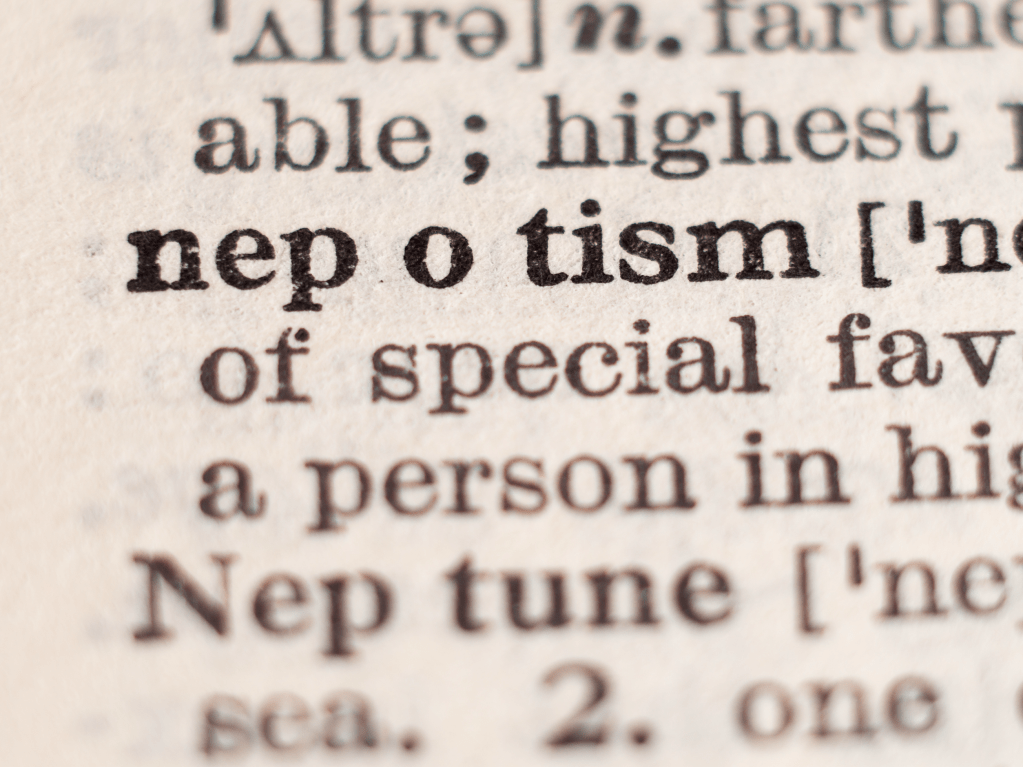
We expect idealism and equality, which are the hallowed goals of a civilized society. We should. But we more often than not expect it from others. If it comes to following it ourselves, that’s another story altogether.
Gone are the days when the Vedic scriptures mention about Sagara(an ancestor of Bhagavan Shri Ramachandra) banishing his son Anshuman for causing harm to the citizenry. It is Kaliyug, as they say. Most now will follow Mr Dhritrashtra even if we vilify him. Bah, some sunflowers even eulogize a serial rapist like Ravana over Shri Rama.
Making jokes at the expense of star kids may make some of us feel good for a while. But these kids will still continue to make loads of money, get more projects, and (hopefully) eventually learn to act as well. I mean, some of them did. Not all are like Sonam (this is my bias speaking).
I ask myself, what may I have done if I had been a star?
Wouldn’t I, too, ensure that my kids or the people I love get a chance at getting work?
And what would I, if I were a kid who has a star parent, wish to do other than follow in their footsteps?
A kid who has grown up seeing masses adoring, elevating their parent or relative to the status of demigods; money following them, unlike almost anything else apart from Cricket (which requires actual ability to sustain) or, say, a political career (which requires you actually to be really good at acting and bluffing).
I, too, have been at the receiving end of a privilege of my own. My folks have helped me out on several occasions. Heck, I have received divine intervention and privilege as well on a number of occasions. Both my paternal father and eternal father, Shri Krishna, have favoured me tremendously. I cannot say about you, dear reader, but I, for one, cannot protest at parents wanting their kids to succeed.
Yes, Mr Dhawan, daddy did buy me a pencil box.
However, I do have an issue I’d have raised if I were a sincere well-wisher to the stars and their kids. I am not, but I write, and some of you give me a chance to share, so let me take you to Paris in 1789.
FRENCH REVOLUTION AND APATHY

On July 14th, 1789, the residents of the famed city of Paris had enough of the rulership’s bourgeois. Revolutionaries stormed the Bastille and executed King Louis XVI. The French Revolution led to the rise of Napoleon, and the rest, as they say, is history.
A quote attributed to Queen Marie Antoinette is said to be one of the seminal moments in French history leading to the revolution. The factual accuracy of the statement is under question, but it is worth pondering over the idea Queen Antoinette’s quote represents.
Upon being implored to look into the plight of the working class people, most of whom could not afford even bread, the Queen is said to have said, “If they don’t have bread, can’t they eat cake?”
The quote represents the disconnect between the elite and the working class. It also highlights how indifferent elites can be to the day-to-day struggles of common folk.
So now, when Suhana Khan says in an interview that she feels Alia Bhatt is being environment conscious by repeating an outfit, it creates more distance between the star kids and common folk.
Mr Dhawan (even when I agree with him) can phrase his comments with more grace and humility than being outrightly snobbish about his privilege.
The stars are made and maintained by the love of the commoners. Most of the relatives of star kids were ordinary folks who made it big in life through a mix of talent, opportunity, and hard work.
Let us admit one thing. Many people despise the wealthy. Many of us are still influenced by the pre-independence ideas that all elite and rich are vassals of the establishment, and they must have done something shady to attain their status. Even if that is not the case, then a person needs an outlet to let go of their pent-up frustrations in life. Wealthy, successful people’s kids coming out with what seems like a school group project seems like an ideal target for frustrated humans to vent out against on social media. This gets accentuated thanks to strange statements from star kids and the film fraternity going gaga over their group project.
However, having stated the above, some friends watched the movie on Netflix. These unbiased people reported that the movie wasn’t bad at all; It was an okay watch, if not phenomenal, as say the kids’ relatives and friends would have us believe.
To conclude, let me share my lessons from the nepotism debate, the spiritual perspective on such things, and advice I sincerely wish to give the stars.
KARMA: PRARABDHA AND KRIYAMANA

Vedic texts help us solve the dichotomy of inequality in nature’s dispensation. Often, people are stumped as to why some people seem to have everything going their way and some, despite all their merits, suffer.
Why is it that some stars shine sans potential while others, despite talent, wither away?
The explanation is Karma. There are many classifications of karma, but for this particular piece, I am going to share about two that are relevant to our discussion.
Prarabdha:
Karma or action is what keeps things in motion. Life is an interplay of various webs of karma getting tangled across lifetimes and leading to existence. Prarabdha is the allotted karma that an individual soul receives for this lifetime. One can even understand it to be fate.
Fate leads one soul to be born in the Khan family, and that too, THE SHAHRUKH KHAN’S family, and this soul to be born in a Singh family.
It is fate that provides those opportunities for one to have easy access to the best directors and producers and for another to struggle in local trains of Mumbai to get a chance to audition for a bit part role.
It is difficult to reconcile with fate. But it becomes easier through the study of Vedic scriptures like Ramayana and Mahabharata, where we see the theory of karma playing out in action and even the best of human beings going through trials and suffering owing to previous karmic reactions.
But fate isn’t random.
Fate is not distributed without order.
Universal wisdom is just.
You get what you ordered for.
You are rewarded for your good karmic investments from previous births. It is just that one does not remember, but the universe remembers each good and bad deed.
However, Prarabdha is not the end of all. There is also Kriyamana Karma, which becomes more critical.
KRIYAMANA:
Kriyamana is the action performed in the now. One can have all the resources, even talents, and abilities, but if not adequately channelized, it can lead to downfall. And just like that, all the blessings from past lives can go to waste.
We have seen numerous examples of the same throughout history and contemporary society as well. So many talented, resourceful, influential people go bust because they cannot channel their blessings.
It’ll be my advice to not just the stars and their kids but also to myself and the people I care about:
Let us not rest on the merits accrued by past lives or previous generations.
Let us not try and check how far our luck can take us.
We have seen good examples of people from privileged backgrounds working hard to earn their place. Even within the Hindi film industry, examples like Shahid Kapoor, who came from a privileged space, trained extensively by joining a dance academy and worked as a background dancer before leaping to lead actor.
Coming from a privileged background should not be a cause to induce unnecessary hate. Each parent would try and help out their offsprings. However, the truest help would be to help them grow both as individuals and in their chosen career rather than acting like Dhritrashtra and indulging in their fantasies without accruing their merit and talent.
Time will tell if the kids from Archies movie grow into stature and stardom or just end up being the son and daughter of so and so.
My personal lesson is to appreciate and bow down to the curious ways of karma. By focusing on my present action (Kriyaman karma) and working harder, I can attempt to be worthy of the blessings, merits, and privileges bestowed upon my life.
If I end up reproducing some day, I’d do well to read this write-up again lest I too fall in the Dhritrashtra trap.
Also, rather than inviting envy against the rich and the famous, I’d rather ignore and skip their work and watch Oppenheimer once again (Amreeka ka dalaal…)
I hope this post plants new and interesting ideas in your mind space. Thank you for giving me your time.
Kushagra
 Wisdom from the Smiling Panda