

Pain is pain. Period. It doesn’t matter who is suffering, what they are suffering, or how they are suffering; any kind of pain makes one suffer. There cannot be yardsticks to measure or quantify pain that, “oh, this kind of pain causes more suffering, another kind doesn’t.”
Have you noticed how people often compare one kind of pain to another?
In efforts to counsel someone, we might say, “Your pain is nothing compared to person X, who has suffered more.” We say such things with good intentions, but they often do more harm than good.
We may say or hear such things from people who I feel have their heart in the right place. Hey, even I have said such things to people in the past, and I am sure you must also have done so.
We feel we are helping the people we care about by saying such things. And out of politeness, the person who hears our well intended words of wisdom may agree but my experience has been that it doesn’t help the other even one bit. Once the conversation is over, the person experiencing pain is back to square one and might even feel more pained than before, thanks to the well-intentioned counselling session!
The fact is, though, that pain is not relative; it is not objective but a highly personal and subjective experience.
Let me give you a few examples that may sound strange, very un-spiritual, even silly. But because these examples are from my life, I can easily share them. After all, what else is this space for but for me to share from a space of vulnerability to help my readers embrace it as well?
NINNY POUNCY
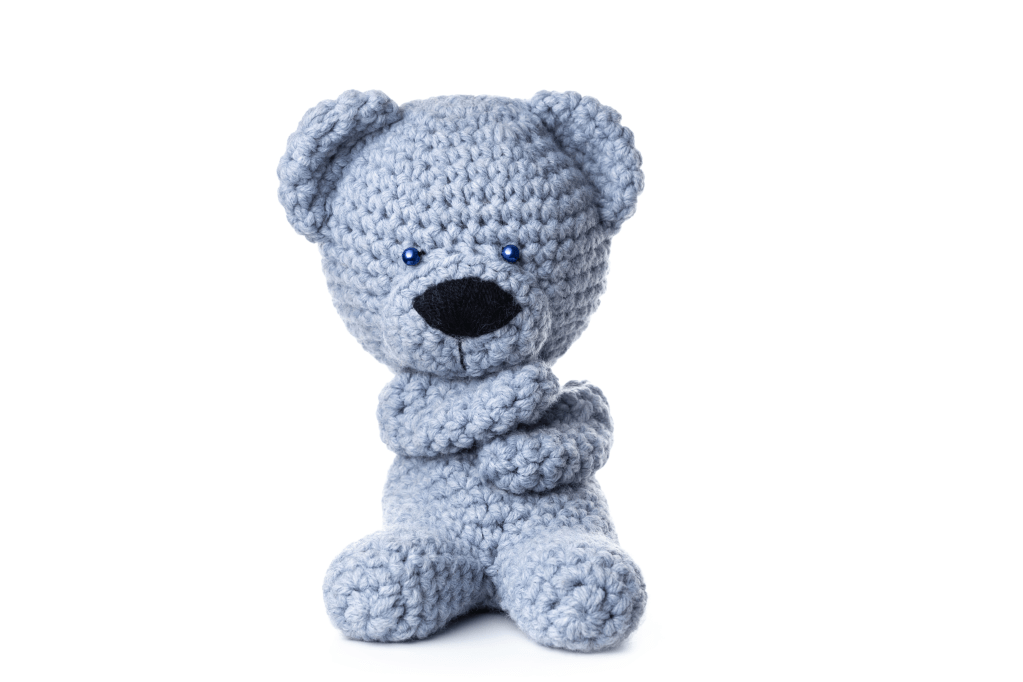
During my early school days, a classmate had an adorable pen/pencil holder. It was the shape of a bear, and that classmate called it ‘Ninny Pouncy.’ I have always been fascinated with cute objects, and cute stationery is something almost every human is fond of especially when we are young.
As I recall, that classmate was kind enough to gift the cute pen holder to me one day after I passed the Cosco-ball that had fortuitously landed in my path to him once during a really important Catch-um-catch match during recess.
I used to carry Ninny Pouncy each day in my pencil box. I was not using it as much as I kept admiring the cute thing. Then, one day, I saw the same pencil holder at a shop. I wanted another one but was rightly advised by my mother against it. Humans used to be niftier back in the 90s, haha.
Big mistake.
Even now, I wish I hadn’t listened to her.
Why?
A few days later, at the end of school, in a frenzy to run towards the bus, my pencil box slipped out of my bag, and from it, Ninny Pouncy.
Ninny Pouncy was never to be found again. (If you hear a sound of something breaking as you read this, it is my heart.)
I obviously experienced pain back then, but imagine how much the loss of that pen holder would have impacted the younger me that a thirty-something adult is writing about pain using the lost pen holder as an example.
THERAPY STORIES

To tackle specific issues in my life, I turned to clinical hypnotherapy for solutions. I liked the process so much I ended up learning it as well!
During one of the sessions with my therapist, Ms Priyanka Bhargava, I recalled an incident from childhood that kept irking me.
A snobbish girl who, unfortunately, sat behind me in class once refused to pay pen fight (such an affront, right?) during a blank period. That snobbish creature didn’t stop at no; she also went to mention the name of another lad from the class that she played pen fight exclusively with. Adult me realized that the exclusive benefits of pen fights were for Mr. V because of his money affluence. Ha!
During the therapy session with Ms Priyanka, we did something called Hypno-drama. Hypno-drama allows one to get into a meditative state employing hypnosis and access specific memories, events etc. to try and heal and reframe them.
During my session, I allowed myself to revisit the scene in school and the child who fell silent at the snobbish pig back then could vent out exactly how he had felt.
I feel glad being spiritual did not come in the way of my healing! Haha.
The reason for sharing the above two supposedly silly but personal examples was to highlight how pain is relative and subjective.
An ordinary man losing their horse in a village and a rich man in a city losing their precious car will feel pain. You cannot rationalize the ordinary man’s pain or even the rich man’s pain.
One should not say to the ordinary man, arrey aapka to ghora hee gaya, woh dekhiye seher waale babu kee BMW uth gayi.
OR
Arey, babu jee aapke paas paise kee kya kami, aap toh nayi gaadi le lenge, insurance money mil jaayegi. Woh gaaon waale bhaiyya ka ghora bhi gaya aur naya lene ke paise bhi nahi.
I have heard people churn out these kinds of talks to help others.
Arrey tumhaari shadi nahi ho rahi, koi baat nahi. Woh falaane kee behen kee shaadi toh chali hee nahi, uska toh pati dhokebaaz nikla.
Arry aapka baccha nahi ho raha? Aaj kal kee mehengai mein bacche paalna kitna muskil hai, accha hai, koi na hee paida ho.
I mean, it is absurd to the level pro max how, in the garb of helping, we can further add to a person’s depression.
It is no wonder that, often, when a human complains, the best approach is to stay silent and hear them out. There is no greater gift.
The next question is how to find someone who’s instantly available whenever you need to share your pain. If you have a partner or a friend like that, fantastic, you’re blessed.
However, wouldn’t it be wiser to develop oneself in such a way that we don’t take our loved one’s gift of time and patience in listening to our sob stories for granted?
BE SOLUTION ORIENTED

Once, a man complained to God about why he was put under so much duress even though he lived a pure life, worshiped God every day, went to the temple, etc. While his neighbor, who was a deviant, doing all kinds of drugs and whatnot, was still happy and prosperous.
God replied, ‘At least he doesn’t bore me each day like you.’
Now, this is just a funny story. But if we dwell upon the subject, we would be convinced that not even God can take constant moaning and complaints.
Paramhamsa Yogananda Jee used to say prayer should be a loving demand rather than a begging.
No person can ever tolerate constant moaning and complaining, no matter how close they are to us. They may tolerate us for a while but slowly start avoiding us like the plague.
While this piece is all about embracing our pain, no matter the context, staying in that zone is dangerous both for our well-being and social life for sure!
So yes, no looking down upon the pain, no self-deprecation or guilt in feeling pain, but jeena bhi toh hai na?
We have to live and keep ourselves in a state where we can experience the good also that life can offer. Because as we keep living and moving forward, we realize that pain shall exist, big or small. Pain is integral to life. Period.
There is an immense need for us to seek and discover tools to help us stay balanced amidst all the trials and pains. We need to mentally equip ourselves to respond appropriately and not reactively. We need to ensure that no matter what kind of pain we experience, we know we will heal and find a way.
There can be numerous ways to tackle pain.
Some choose to numb it through drugs and alcohol. I am sure that helps at the moment, but in the long term, the adverse effects on life, relationships, and, most importantly, health are devastating.
Some seek shelter from religion. As long as it doesn’t make you a bigot, of which there are high chances because humans can be territorial and politicize even the divine. Seeking shelter from religion, though, if done under the guidance of a realized master, through scriptures, and with a determined faith of willingness to make OUR life better (not concerned with others), can definitely make us resilient, happier, and mentally stronger.
For many of us though religion has sadly become a word loaded with emotions such as bigotry, falsehood etc. Sadly, without even attempting to make an effort to read scriptures, we reject it.
So then what?
Are there safer ways to ensure we can manage and mitigate pain and make ourselves more resilient?
Yes, let us discuss a few.
JUST DO IT

Yoga, Pranayama, and Dhyan
The ancient methods of authentic yoga sadhana help us regulate emotions and go beyond temporary identification of the mind and body. The goal of yogic practices is to unite the soul with the divine. Or, as some define, the goal of yoga sadhana is to recognize the divinity within.
Consistent, sincere, and authentic practice of yoga sadhana can definitely make us supremely resilient to the painful incidents in our lives.
What yoga does is also ensure we are moving our body which anyway helps in regulating emotions. Movement is life, and often, in times of stress and pain, that is what we restrict in our lives. We feel like staying in one place, often away, even from our loved ones, and just basking in the pain. Not recommended at all!
If yoga is not your jam, movement of any other kind, like walks, runs, gymming, etc., is effective in making us more resilient.
Counselling
When Shri Rama was devastated and inconsolable after Ma Sita’s kidnapping, Shri Lakshmana demonstrated the best kind of counselling. He heard his brother out and let him vent for a while. But after that, he ensured to motivate him, inspire him to take action to overcome the despondency, but also lovingly and firmly chastised his elder brother to not allow depression to take root in his mind.
This is the best example of how and what to expect when approaching someone to share our grief with. Let the space be safe, non judgemental. But most importantly let that person whom we approach to share our grief be able to point out a flaw in remaining stuck with the pain.
What Shri Lakshman does is to remind Shri Rama of his own divine wisdom and character, to not give in to the grief to the extent that it immobilises him. He also ensures to speak words of kindness and hope that if they take action they can overcome the pain they are experiencing.
Of course, it is good that more and more people are now choosing to tackle their issues via therapy and professional counselling.
TIME FACTOR
Time, the most powerful, destructive, and also healing factor in the lives of the mortals.
Time eventually takes away everything, even pain. Our play of life is a brief event on the cosmic scale.
History, both that of the macro and our own reminds us that eventually things change. The pain we experience now will make space for another emotion. Or time will teach us how to adapt.
It is also unwise of us to underestimate the power of human spirit. We are really tenacious beings, having the ability to adapt to any situation. So ya, while acknowledging the current state of reality, do remind yourself that this will pass.
The nature of human beings is such that we must act. We will act, come what may. Even not doing something is an act!
As Yogeshwarishwar Bhagavan Shri Krishna explains in the Gita:
न हि कश्चित्क्षणमपि जातु तिष्ठत्यकर्मकृत् ।
कार्यते ह्यवशः कर्म सर्वः प्रकृतिजैर्गुणैः ॥
Everyone is forced to act helplessly according to the qualities he has acquired from the modes of material nature; therefore no one can refrain from doing something, not even for a moment.
To conclude:
- Pain will a constant companion and a reminder for being alive.
- Rather than comparing or belittling our anyone else’s pain, accept, acknowledge and embrace it.
- Once you have acknowledged the pain, seek ways to mitigate and manage it.
- Remember Shri Krishna’s words: You cannot ever remain inactive even if you wish to.
Here are a few reflections for you:
Have you ever belittled your pain?
How can you work on acknowledging your pain and how do you recommend tackling it?
May you be blessed with growth and joy.
Kushagra
P.S. After dishing out all the gyaan, here is something nice that I read from a book recently:
“Your grief is yours to process in your own time, in whatever way works for you. No one can tell you how to do that.”
 Wisdom from the Smiling Panda