
Diwali: One of the most beloved festivals of the land. One that brings people together to exchange gifts, savor good food, dress up, click pictures, and light up lamps. (These days, it also means labeling one another with terms like sanghi, liberandu, and so on, depending on one’s views about bursting crackers.)
Life’s frenzy, lack of education on the subject, and the inherent variety and diversity of this land and culture leave people either nonchalant, unaware, or confused about why we celebrate the festival in the first place.
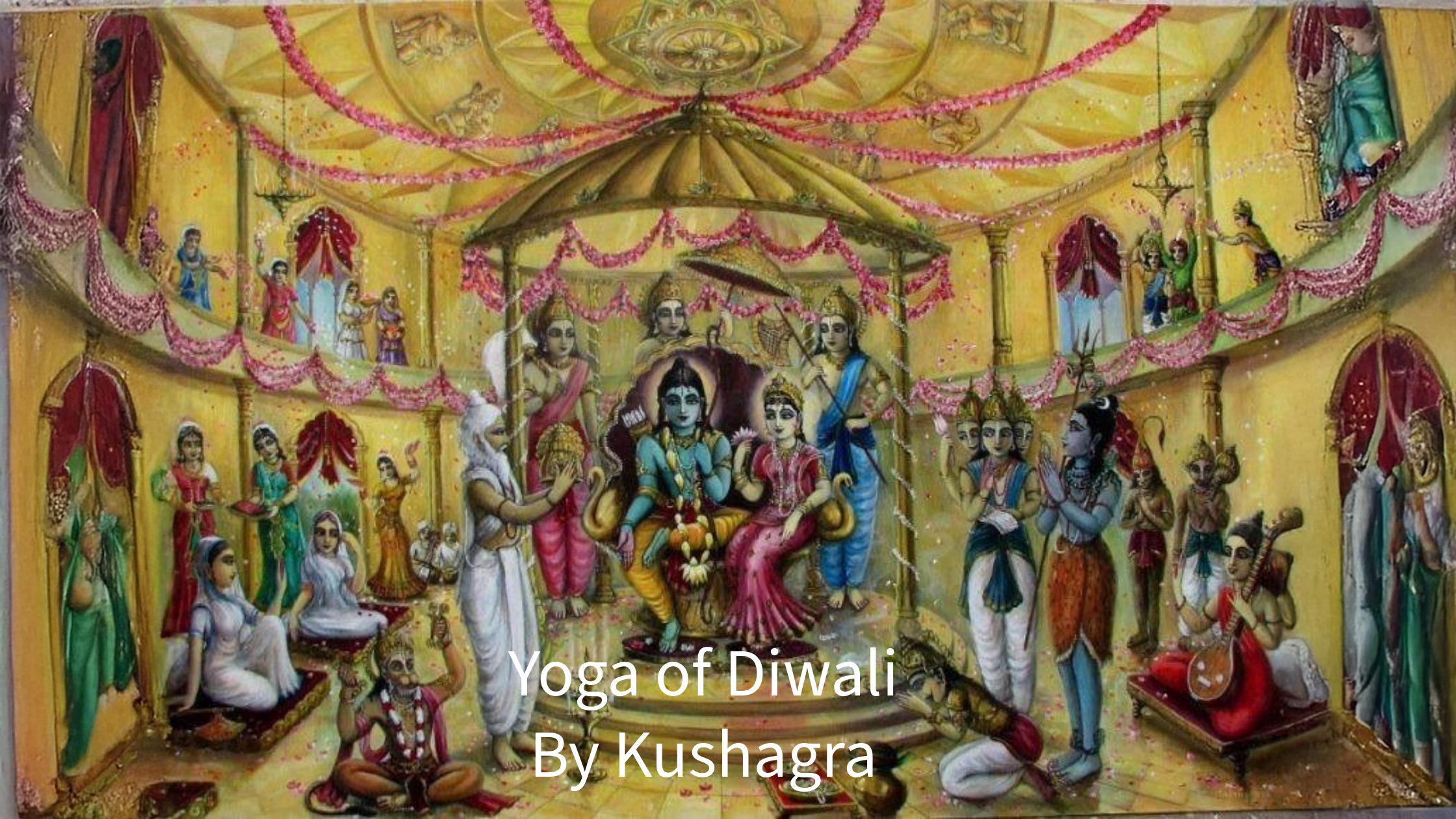
Of course, the popular story of Shri Ramayanam, which is inherent to the ethos of this land and culture, speaks of the return of the erstwhile, exiled prince back to the kingdom after 14 long years. The homecoming became extra special, for it also marked the triumph of their beloved Rama over a tyrannical king down south. The residents of kingdom of Ayodhya welcomed Shri Rama by lighting up lamps all over and expressing their appreciation for their new king.
The above does paint a picture, but not in its entirety.
Shri Rama’s homecoming is not simply about vanquishing a king down south who had abducted his wife.
Shri Rama’s homecoming is about overcoming adversity
Shri Rama’s homecoming is about following one’s dharma— conscious drive purpose
Shri Rama’s homecoming is about following the path of integrity
Shri Rama’s homecoming is a reminder that a person of his stature spreads light and joy through his activities and presence, as well as lighting up lamps to initiate catharsis of negativity in mind and heart.
Shri Rama’s homecoming serves as a reminder of the glorious history of this land and its people, which the present belies.
Then there is another story and legend of Yogeshwar Bhagavan Shri Krishna rescuing thousands of abducted women by vanquishing a king named Narakasura.
From Bhakti Yoga perspective, the divine absolute truth, Baby Krishna was bound up by the ropes of love by his Mother (Yashoda). Diwali becomes an opportunity to revel in the idea that God is attainable; God is not just attainable but reciprocates with love; God/Krishna IS love.
Devout Sanatanis engage in clearing clutter, deep cleaning the house, and preparing their home for Devi Mahalakshmi.
Devi Mahalakshmi and (her son like) Shri Ganesh are worshipped so that the obstacles on the path of success and attainment of goals are removed, and one revels in abundance. Abundance signifies not just material wealth but health (festivities kick off with worshiping the deity of Ayurveda and health—Dhanvantari), joy, fortune, love, and refined intelligence.
(I distinctly recall being advised by elders in childhood to bring my books and pens to the home temple and seek blessings from Devi Saraswati, Goddess of knowledge and learning)
Cleansing and decluttering are means of attaining the grace of Mahalakshmi, which leads the heart and mind to feel refreshed and renewed after making efforts to beautify the surroundings.
Worship with the right intention leads to hope, peace, and inspiration that goals and dreams can be realized with divine grace and concentrated efforts.
Lighting up lamps (or candles) is a beautiful exercise unto itself. Fire has such an energy and intensity that it mystifies and delights, so much so that Fire was once worshipped in many parts of the world.
Based on God-given intelligence, my humble observation is that even if we strip away Diwali’s historical and spiritual aspects, it makes sense for people to have started lighting up lamps in the evening.
Before electricity and after the discovery of Fire, once autumn arrived and the sun set earlier than usual, lighting up lamps made logical sense for people of this land who usually experienced abundant sunlight for most of the year.
Natural light in the form of lamps (or Akashdeeps or sky lamps, as the Padma Purana prescribes) also brings clarity, vision, and hope and dispels fear and negativity.
To connect the necessity and the routine to the divine has been the genius of the masters of the land, and that is what is called Yoga (union).
Yoga is not just on the mat (asana or prayer);
Yoga is a way of life;
Yoga endeavors to help humans accomplish Dharma (righteous action), Artha (wealth), Kama (fulfillment of desires), and Moksha (liberation from repeated cycles of birth and death).
Diwali is a reminder to bring Yoga into our lives.
Diwali is not just a festival of “me and mine to you and yours” and “Soan Papri jokes” but one of deep reflection and spiritual significance.
May Diwali be an opportunity for all of us to grow in joy.
Jai Shri Sita Rama Lakshman Hanuman
Jai Shri Yashoda Maiyya, Jai Shri Krishna.
 Wisdom from the Smiling Panda
Sonal
beautifully written
LikeLiked by 1 person
Priyanka Chaudhary
Indeed a very profound perspective on Diwali. I liked how you holistically covered Diwali and mentioned about it’s authentic purpose of celebration
HAPPY DEEPAVALI 🎆 ✨️ 🙏 😊
LikeLiked by 1 person